
Structure
Cracks and fissures: when to worry
Updated: 2026-08-23
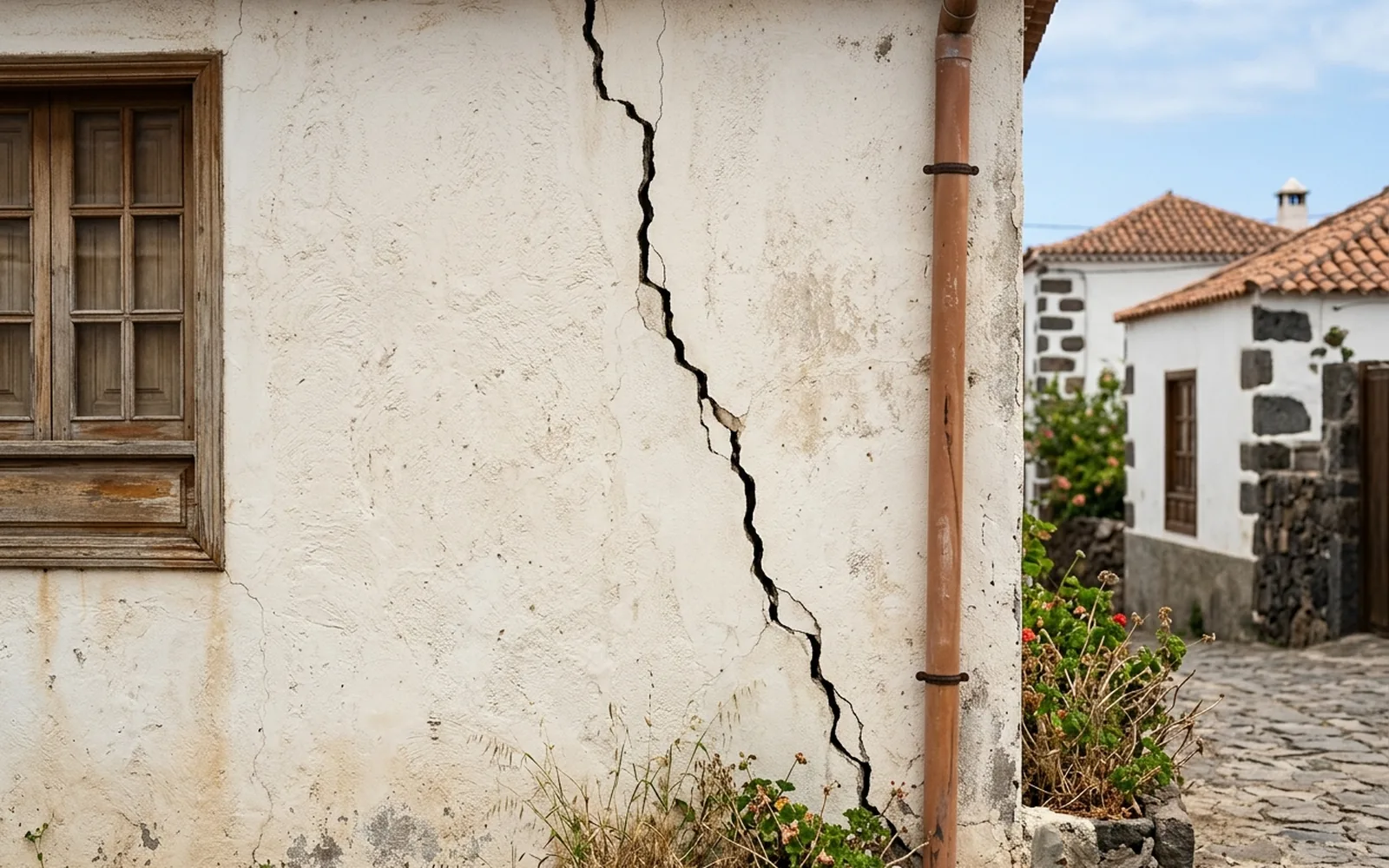
First, the terminology: a fissure is not the same as a crack
In technical language, a fissure is a fine opening, usually superficial, that doesn't go through the element; a crack is wider, deeper and usually indicates a more serious movement or failure. The difference matters because most fissures are a finish problem and most cracks deserve, at least, monitoring.
Another useful nuance: what appears in a plasterboard or brick partition, which holds nothing up, is not the same as what appears in a column, a beam, a slab or a load-bearing wall, which are the elements that do hold the building up.
Common damage that is usually benign
These appear in almost any building and, in general, don't affect the structure:
- 01Fine fissures at window and door jambs and lintels, where the wall is weakest.
- 02Fissures at joints between different materials: partition and column, ceiling and wall, carpentry and partition.
- 03Superficial cracking of renders and paint due to shrinkage or temperature changes.
- 04Fissures in partition walls that reappear after painting, without growing in width.
Warning signs that do deserve attention
There are patterns a technician takes seriously because they can indicate ground settlement, overloading, reinforcement corrosion or problems with the structure itself:
- 01Cracks that grow: they lengthen or open over months or with the seasons.
- 02Diagonal cracks at the corners of windows and doors, or slanting across the wall.
- 03Stepped cracks following the joints of brick or block masonry.
- 04Fissures crossing the slab or appearing in columns, beams and load-bearing walls.
- 05Leaning, bulging or spalling concrete with corroded reinforcement in sight, frequent on balconies.
- 06Doors or windows that suddenly rub or don't close, or floors that tilt.
What you can do before calling a technician
Documenting the damage well greatly helps the diagnosis and costs nothing:
- 01Photograph the damage with a date and a scale reference (a ruler or a coin).
- 02Note when it appeared and whether it coincides with something: nearby works, a renovation, an incident, a rainy season.
- 03Repeat the photo every two or three months from the same point to see if it evolves.
- 04On cracks, a plaster tell-tale or a crack gauge shows whether it is still moving; a technician installs it.
When a technical inspection is advisable
Ask for a technical assessment if the damage matches any warning sign, if it affects structural elements, if it will condition a sale or a renovation, or if you simply can't rule out that it's serious. Also if an owners' association, an insurer or an administration requires a report from you.
The inspection resolves exactly that doubt: a technician examines the structure, describes and documents the damage, assesses its extent and tells you what to do: monitoring, repair or, where appropriate, testing or a more detailed study. That is the content of the certificate of structural condition, which you can consult on the service page.